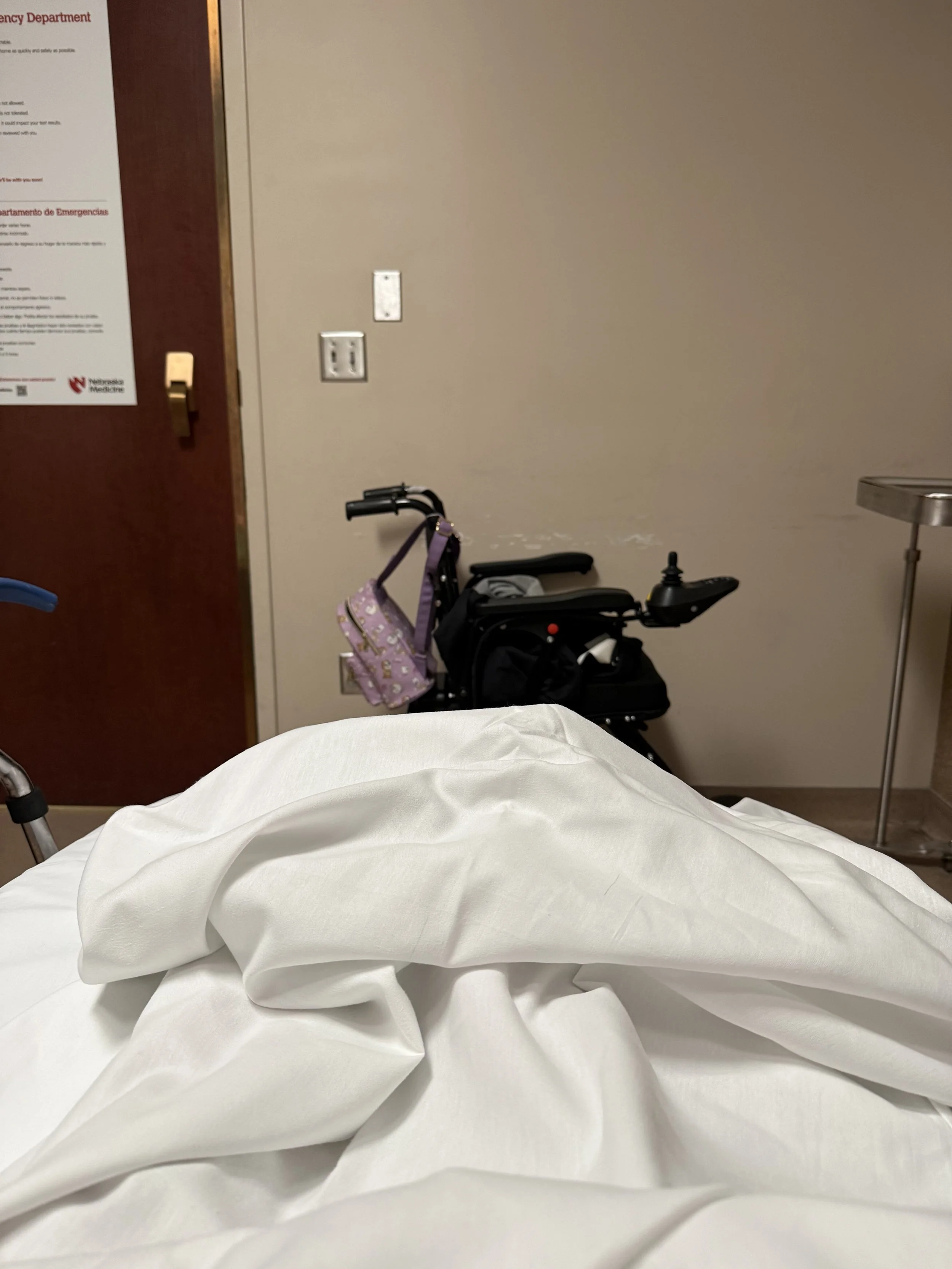
Yesterday did not go as I hoped it would. The morning started like any other—I woke up, got my son ready for school, grabbed my protein shake, and sat down for a moment. Within the hour I was in the ER waiting to see a doctor for my surgical wound opening up.
As I sat in the ER waiting, the anxiety and worry faded, but other thoughts and emotions began flooding in. I began to blame myself and felt disappointment – “What did I do wrong?” Multiple thoughts of the morning went through my head – “Did I walk a different way? Did I bend wrong? Did I hit it?” Even if I had done something to injure it, blaming myself or searching for answers I didn’t have would not change the situation.
As that acceptance began to settle in, frustration quickly followed. I was upset because I had plans for the day. I kept thinking: I followed the instructions. Why was this happening?
• Cover for 2 weeks — Check
• Staples removed between weeks 2–3 — Check
• Elevation and ice for swelling — Check
• Exercises 3 times a day — Check
My mind raced through all the “what ifs,” but none of those thoughts could change the outcome. I had to realize that I could not go back and change that my wound had opened and now I was sitting in the ER waiting for the doctor to receive a call from my surgical doctor to move to next steps.
The ER provider returned with news after a few hours of waiting. She reported that the doctor wanted her to use terry strips to bring it back together, wrap with gauze and an ace bandage. From there I had some restrictions:
1. No bending the knee – must use a knee immobilizer
2. No getting it wet
3. Limited physical therapy to avoid excessive bending and movement
This brought on a new wave of thoughts and feelings. I was concerned about how this setback would slow my progress. I was frustrated by the new restrictions because they felt like a setback to the progress, I had worked so hard for.
But after leaving the hospital and taking time to reflect, I realized something important:
A setback does not erase the progress that came before it.
I can feel upset, frustrated, and disappointed—those feelings are valid. But I cannot allow this moment to become a reason to blame myself or lose hope in my recovery.
Setbacks happen. Recovery has detours. Healing is often messy.
And that is something I need to remember throughout this journey.
Healing isn’t always about moving forward perfectly.
Sometimes it’s about continuing, even after setbacks.